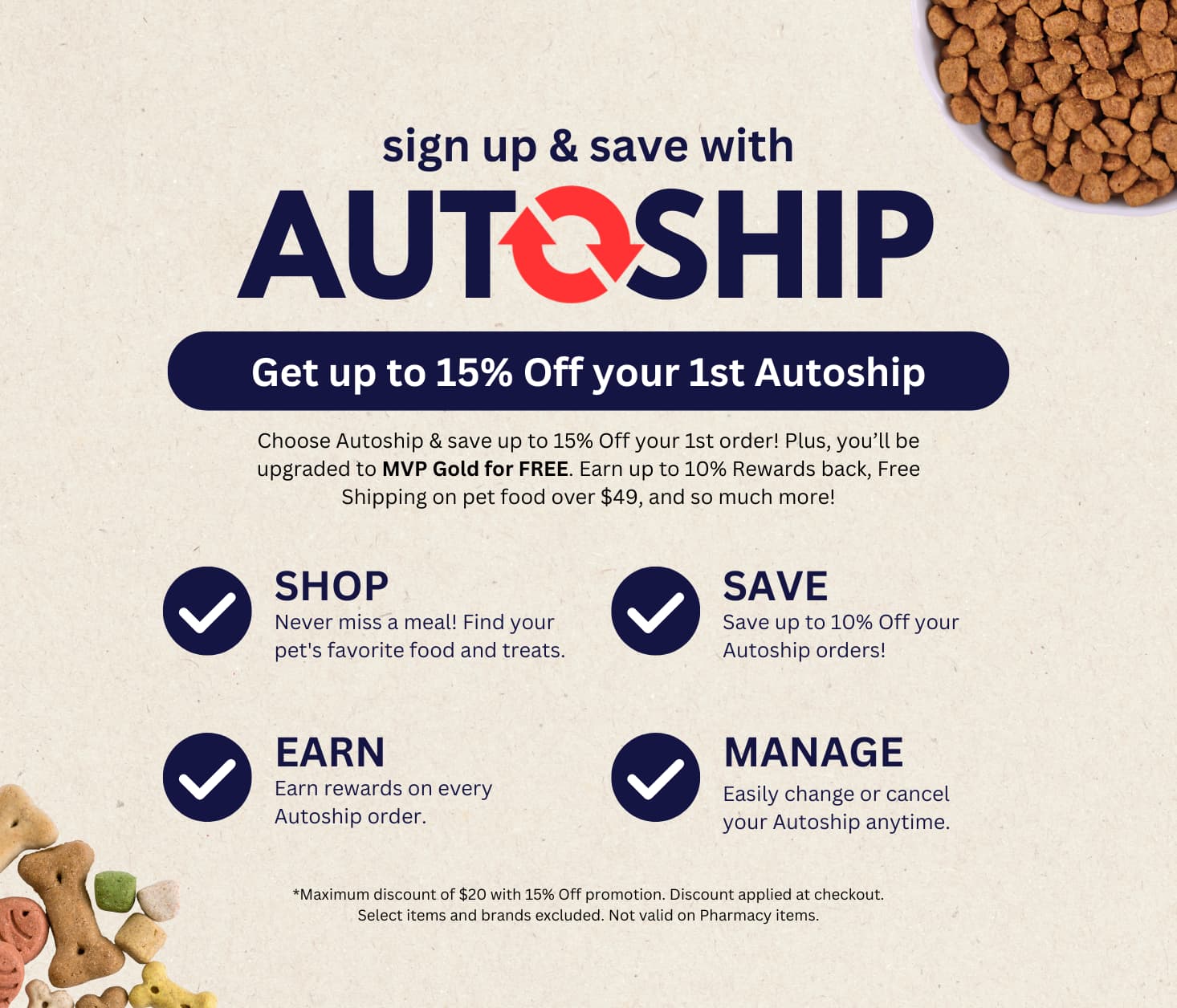
 Save 15% on your 1st Autoship learn more

 Email us
 Live Chat
 FAQs
FAQs





























5.0 (13)
Dear Human,
Proper footwear fit is essential to a fun day out (or in). Here's how to measure your pet's paws...
Length
With your pet's paw on the ground, measure from the tip of the claws (those have to fit inside the shoe too) to the back of where the paw touches the ground, which is just behind the pad.
Width
While your pet's paw is still on the ground, measure from side to side at the widest point of your pet's paw, which is usually near the base of the toes.
Handy Tip: Try having your pet step on a piece of paper, then trace around the paw. Then, while your pet is off eating your houseplants or terrorizing the neighborhood, you can measure the traced outline in peace.

Get help from our pet experts
1-888-887-0063
|
Sucralfate is used to treat oral, esophageal, gastric and duodenal ulcers. |
| For |
|
Dogs and Cat |
| Benefits |
|
Sucralfate may also be used to prevent non-steroidal anti-inflammatory induced ulceration. This medication forms a barrier over the ulcer. This barrier protects the ulcer from the acid of the stomach, allowing it to heal. |
| Active Ingredients |
|
sucralfate |
| Side Effects |
|
Side effects may include constipation, but they are rare. Vomiting has been reported in cats. Other side effects may occur. If you notice anything unusual, contact your veterinarian. |
| Usage |
|
Sucralfate should be given orally generally on an empty stomach as directed by your veterinarian. Try to give this medication at about the same time(s) each day. |
| Cautions |
|
This medication does not have an FDA approved indication for use in animals, but it is a common and acceptable practice for veterinarians to prescribe this human medication for use in animals. Do not stop giving this medication to your pet unless directed by your veterinarian. Make sure to tell your veterinarian what other medication you are giving to your pet. Quite often your veterinarian may prescribe two different medications, and a drug interaction may be anticipated. In this case, your veterinarian may vary the dose and/or monitor your pet more closely. The following drugs can potentially interact with sucralfate, the use together may not necessarily be contraindicated but additional monitoring may be appropriate: fluoroquinolone antibiotics, cimetidine, tetracycline/doxycycline, ketoconazole, levothyroxine, theophylline, fat soluble vitamins, phenytoin, digoxin, and antacids. Separate the administration of sucralfate and these drugs by 2 hours. Contact your veterinarian if your pet experiences any unusual reactions when different medications are given together. Allergic reactions to medications may occur. Be sure to inform Pets Choice and your veterinarian if your pet has any known drug sensitivities or allergies. If your pet displays symptoms of an allergic reaction, call your veterinarian immediately or go to a veterinary emergency clinic. Symptoms may include but are not limited to: swollen lips, tongue, face, airways; difficulty breathing; agitation; profuse salivation; vomiting; widespread hives and itching. |